I first encountered this recipe in "How to Cook and Eat in Chinese" by Buwei Yang Chao:
Tea eggs are one of those ways of hard-boiling eggs so long that they are soft again. They are not so much a dish as a breakfast "dot-heart" or between-meal "dot-heart", though sometimes also eaten at big meals. They are especially good for travelling and for picnics. Serve cold or hot.
2 dozen eggs, 2 teaspoons black tea, 1.5-2 tablespoons salt, 1 tangerine rind.
Boil the eggs for one hour. Cool in cold water and crackle the sheels, but do not detach. Boil again in enough water (about 6 cups) to cover all the eggs. Add in the tea, salt, and the tangerine rind. Simmer for two more hours and stop the fire, but keep the eggs in the juice. Serve hot or cold. The juice is only for external use by the eggs.
The eggs are usually best on the first or second day, if they are not too good to last that long. So long as these eggs are immersed, there is no need to keep them in the icebox except in extremely hot weather. If the eggs get too salty from soaking, their taste can be lightened by soaking in fresh water.
Back then I didn't know what a tea egg was, so I just tried the recipe. It was good. Years later I bought a tea egg in China and it was very similar to the results of my earlier cooking experiment. Even though the book says there is no need to keep them in the icebox I would still recommend putting them in the fridge. Mine went bad after about a week at room temperature.
Homemade tea egg in 2014: 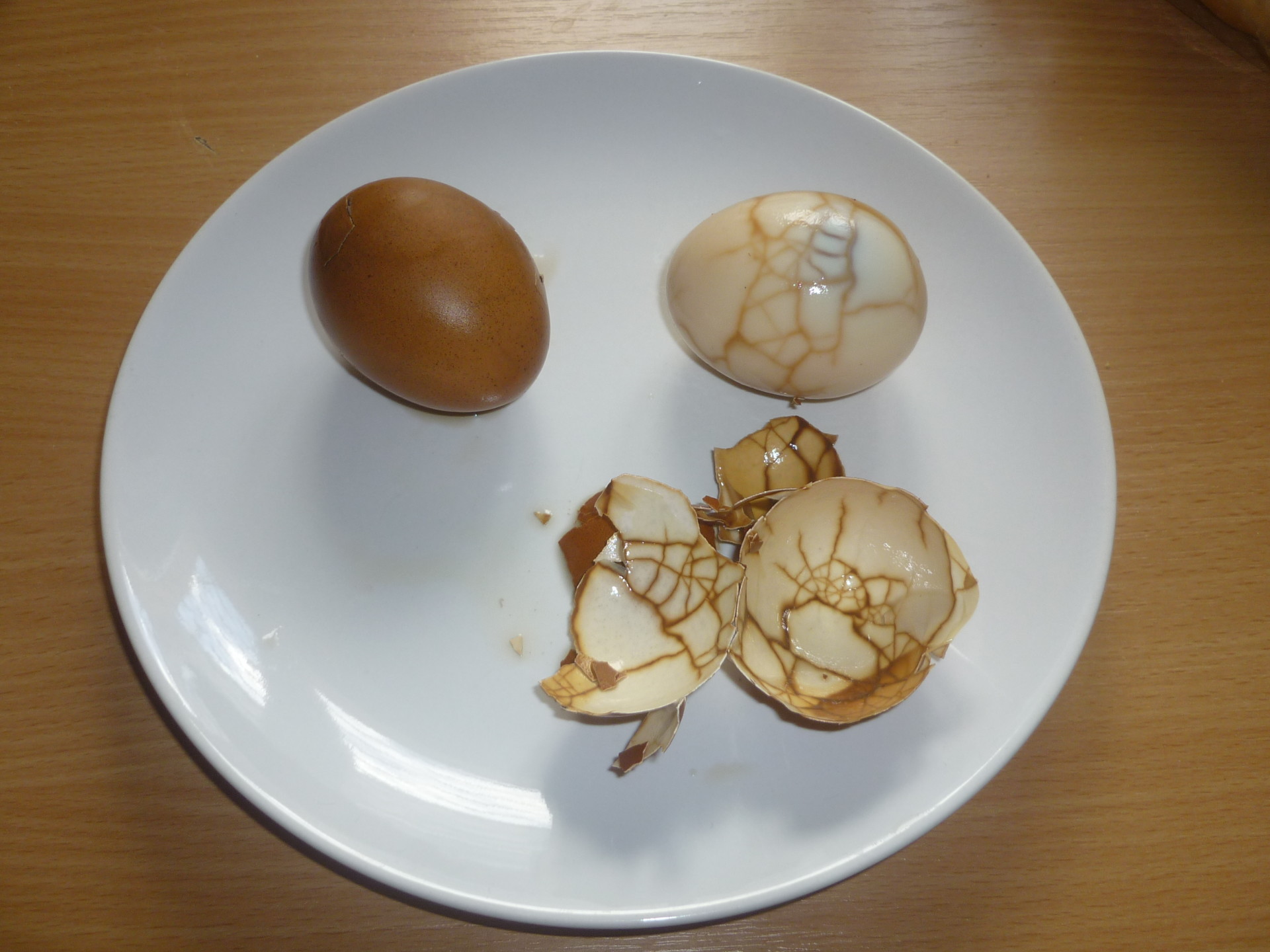
Chinese tea egg in 2016: 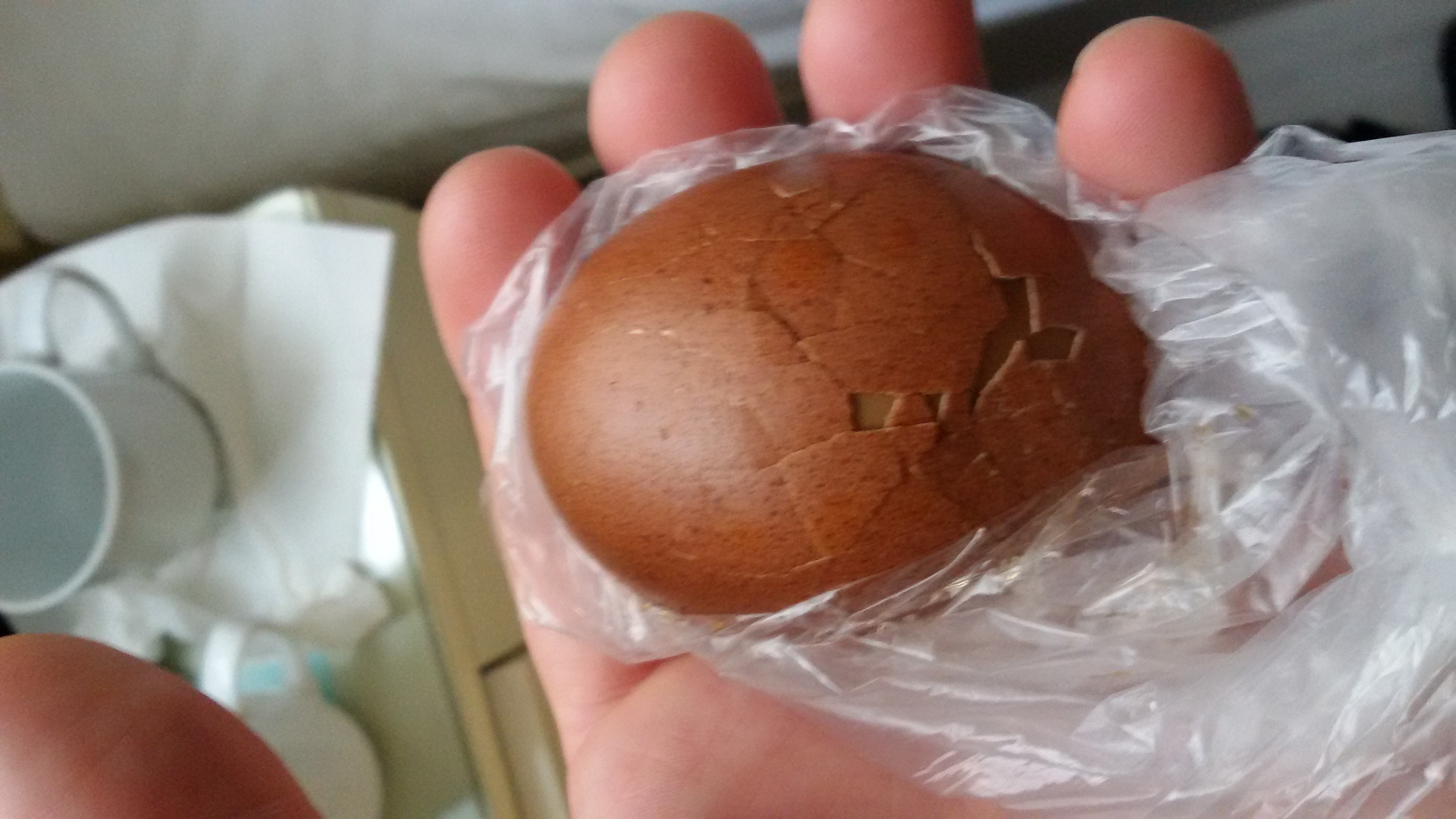
Homemade tea egg in 2019: 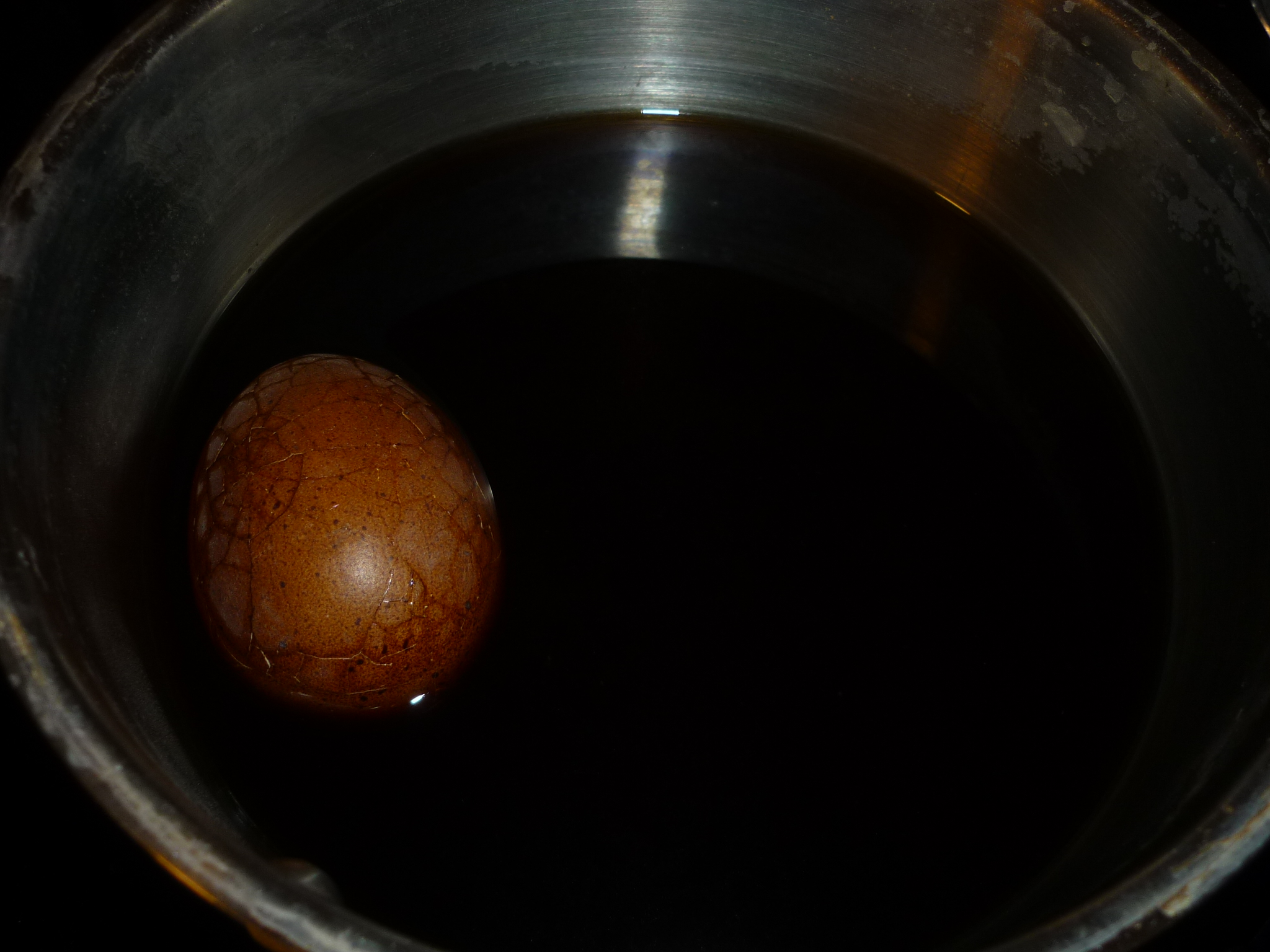
Looking at the original recipe, it's not easy to find edible tangerine rind in Austria. I tried using tangerine essential oil once and it was ok but does not really warrant the effort. If you look for tea egg recipes online, there are all kinds of variations, using different spices, soy sauce instead of salt, ... Basically, just use what smells good and is easily available.
One thing all the recipes have in common though is cooking the egg for several hours. I asked myself, is this really necessary? After all, an egg turns completely solid after 10 minutes, meaning all the proteins have denatured already.
It turns out though, the long cooking time really makes a difference, in both taste and consistency. Also don't forget we need some time to get the salt and flavors from the marinade interacting with the egg, and hot water is more effective there.
Take this excerpt from "On Food And Cooking" by Harold McGee - not really about Chinese tea eggs, but interesting nonetheless:
Long-Cooked Eggs
An intriguing alternative to the standard hard-cooked egg is the Middle Eastern hamindas (Hebrew) or beid hamine (Arabic), which are cooked for anywhere from 6 to 18 hours. They derive from the Sephardic Sabbath mixed stew (called hamin, from the Hebrew for "hot"), which was put together on Friday, cooked slowly in the oven overnight, and served as a midday Sabbath meal. Eggs included in the stew shell and all, or alternatively long-simmered in water, come out with a stronger flavor and a striking, tan-colored white. During prolonged heating in alkaline conditions, the quater-gram of glucose sugar in the white reacts with albumen protein to generate flavors and pigments typical of browned foods [...]. The white will be very tender and the yolk creamy if the cooking temperature is kept in a very narrow range, between 71-74°C.